Agriculture
Rao Inderjit Singh at Shikohpur: Urges Farmers to Quit Paddy, Hits Out at Congress
At a PM-Kisan event in Shikohpur, the Union minister paired a political jibe at Rahul Gandhi with a push for crop diversification as groundwater levels fall.
Desh Flash desk31 October 2026, 12:45 pm IST2 minUpdated 31 October 2026, 12:45 pm IST
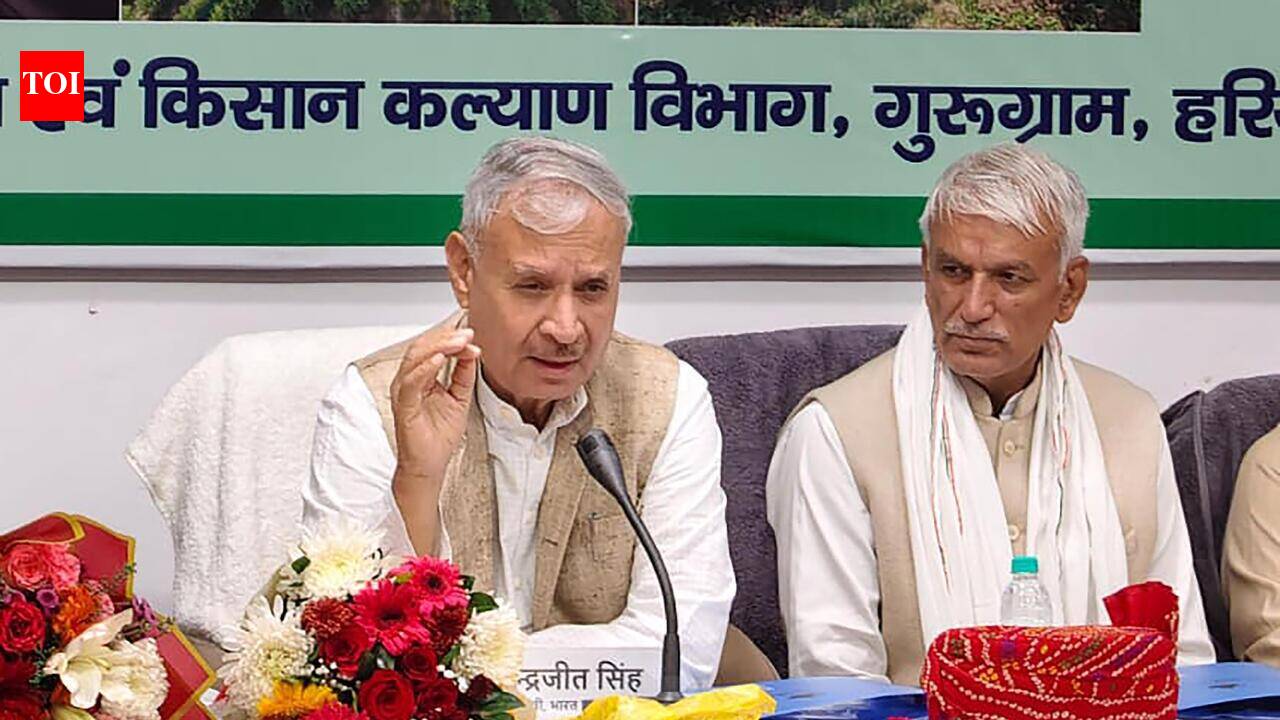
Rao Inderjit Singh used a PM-Kisan outreach event in Shikohpur on Friday to do two things: criticise the Congress over what he called internal divisions, and urge farmers to move away from water-hungry paddy towards crops that need less water. He spoke on the sidelines of a district-level programme at the Krishi Vigyan Kendra, held to mark the release of the 24th instalment of the Pradhan Mantri Kisan Samman Nidhi.
On politics, Inderjit said the Congress's organisational disarray was visible to everyone and that its leaders were caught up in internal tussles. He also took a swipe at Rahul Gandhi, saying he had failed to put his team and party structure in place. By contrast, he described the BJP as a well-structured organisation in which workers, office-bearers and leaders function in coordination, and he urged party workers to stay active in public service.
The more consequential message for rural India came on water. With groundwater levels continuing to fall, Inderjit asked farmers to shift from paddy to maize, bajra, pulses and oilseeds. Diversification, he argued, would conserve water, protect soil fertility and open up additional income streams. He framed groundwater protection for future generations as a collective responsibility in which farmers have a central role.
Why it matters for the morning's economic read: the crops he named line up with long-running policy goals. Pulses and edible oils are areas where the minister called for higher domestic production, a theme that touches both farm incomes and import dependence. A shift in acreage, if it happens at scale, would be something commodity watchers and rural-demand trackers follow closely.
Inderjit also pointed to the government's farm support toolkit, citing PM-Kisan, the Pradhan Mantri Fasal Bima Yojana, the Kisan Credit Card scheme and minimum support price mechanisms as measures meant to strengthen farmers financially and make cultivation more viable. He called agriculture central to India's economy, food security and rural development.
On the practical side, he backed wider use of technology-driven and sustainable practices, including micro-irrigation and natural farming. The pitch is that farmers who adopt such methods can cut water use without giving up returns, though the source report did not detail specific incentives for switching crops.
The event shows how political messaging and farm policy often share a stage at scheme-release programmes. Read the original report at The Times of India.