Economy
Pralhad Joshi Says Renewable Energy Drew Over Rs 6 Lakh Crore in Two Years
Following the Bharat Renewable Energy Summit and Expo, states and investors are pushing solar and wind expansion as India eyes 500 GW of non-fossil capacity in a decade.
Desh Flash desk3 November 2026, 9:05 am IST2 minUpdated 3 November 2026, 9:05 am IST
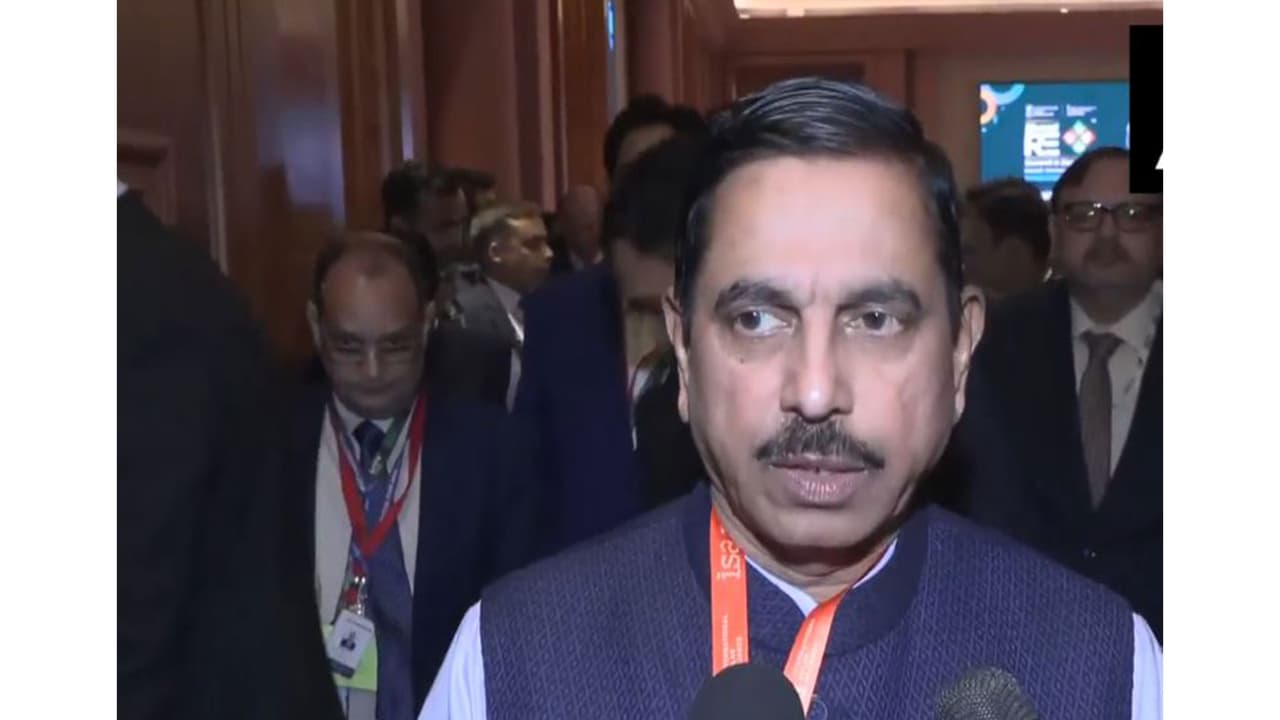
Union Minister Pralhad Joshi said on Monday that India's renewable energy sector has attracted more than Rs 6 lakh crore in investment over the past two years, and he said he expects the next round of commitments to be even stronger. He made the remarks on the sidelines of the Bharat Renewable Energy Summit and Expo.
The summit drew a broad crowd, according to Joshi. He said it included international investors, representatives from more than 30 countries, several Chief Ministers and Deputy Chief Ministers, and state ministers. He credited Prime Minister Narendra Modi's address with setting a high bar for the event and guiding the discussion that followed.
The wider policy frame is ambitious. Prime Minister Modi has framed clean energy as central to the country's economic security, and the government has set a target of 500 GW of non-fossil fuel capacity over the next ten years. Investment at the scale Joshi described is what that target will require, since solar parks, wind farms and grid upgrades all need long-term capital.
State governments are also making their own moves. Andaman and Nicobar Islands Lieutenant Governor Dinesh Sharma called the summit a useful push for solar and other alternative energy, noting that states are working out how to widen adoption. Discussions were set to continue into the following day.
Uttar Pradesh's Power Minister Arvind Kumar Sharma pointed to the state's rising demand. He said it had met peak summer demand of more than 32,600 MW over the past four years and had roughly doubled its number of electricity consumers in six to seven years. He also highlighted rooftop solar as a major opportunity, given the state's large household base and its many commercial, industrial and institutional buildings.
Delhi is planning a similar shift. Cabinet Minister Ashish Sood said the capital's peak demand crossed 8,600 MW this year and is projected to reach 11,500 MW by 2034-35. The city's new solar policy, he said, aims to meet that growth through a revamped approach, including 2,20,000 rooftop solar installations offered free of cost and a target of 750 MW of solar generation.
For investors, the message is that demand growth at the state level and national capacity goals are now moving in the same direction. For households, rooftop solar subsidies and state policies could make clean power a practical choice rather than a distant one. The next test will be whether announced investment turns into commissioned capacity on the ground.
Read the original report at Asianet Newsable.
More in Economy
 Economy
Michael Patra Defends Curbs on Indian Mutual Funds' Overseas Investment Cap
 Economy
IFFI 2026 in Goa, Nov 20-28: Film Festival Eyes a Creator-Economy Makeover
 Economy
Delhi traders say INDIA bloc Ramlila rally cost markets up to Rs 11,000 crore
 Economy