Business
Air India CEO Tewolde Gebremariam Eyes More Wide-Body Jets to Win Back Market Share
The loss-making carrier is weighing a fresh order for long-haul aircraft while it works on costs, revenue and a hub strategy shaped by Pakistan's airspace closure.
Desh Flash desk4 November 2026, 10:55 am IST2 minUpdated 4 November 2026, 10:55 am IST
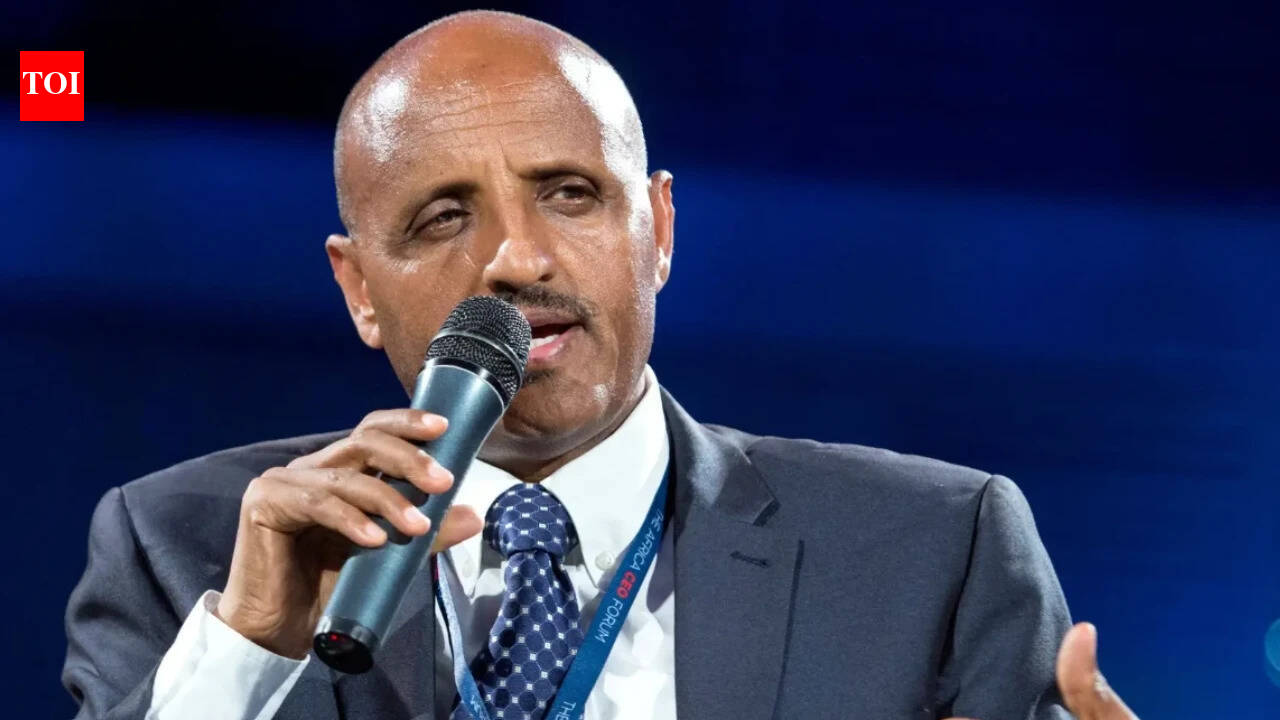
Air India is considering a fresh order for wide-body aircraft, CEO Tewolde Gebremariam said at Aviation India 2026 on Tuesday, as the Tata-owned carrier looks to reclaim ground lost to foreign rivals. Speaking publicly about his plans for the first time, the former Ethiopian Airlines executive said the airline has been punching below its weight for too long and that the long-haul business should belong to Air India.
The near term is difficult. Air India posted a record loss of Rs 22,238 crore in the last fiscal year, and the group, which includes Air India Express, has lost more than Rs 58,000 crore since the Tata takeover in January 2022. That burn has raised concern among promoters Tata Sons and Singapore Airlines, and the carrier is seeking fresh funding. Gebremariam acknowledged that profitability is a worry, but argued that the long-term opportunity is large and that the airline could turn a profit sooner than many expect if it focuses on cutting costs and lifting revenue.
On costs, he described the creation of multi-function teams aimed at raising efficiency, and closer coordination between Air India and Air India Express so the two can share common functions. The stated goal is to bring unit costs down to industry levels. Revenue is being pursued through a rebalanced hub network, since the closure of Pakistani airspace to Indian carriers has disrupted flights between Delhi and the West. Air India is adding services from Mumbai to Western destinations and from Delhi to South and Southeast Asia, and is evaluating Bengaluru as a third hub.
The wide-body question sits at the center of that plan. The Air India group has around 600 aircraft on order from Airbus and Boeing, but only about 80 of them are wide-bodies. Gebremariam did not disclose the size of any additional order, but said the existing fleet is not enough to serve demand for long-haul travel to and from India. He pointed to a diaspora of roughly 30 million people abroad and argued that India could support global hubs in Delhi, Mumbai, Hyderabad and Bengaluru if the airline gets its product right.
For investors and travellers alike, the message is that Air India's recovery is a multi-year project rather than a quick fix. Geopolitical constraints, the pending report on last June's Ahmedabad crash involving flight AI 171, and the cost of rebuilding the fleet all remain open questions. Still, a clear plan to trim costs, redraw routes and expand long-haul capacity gives the carrier a framework to measure its progress against over the coming quarters.
Read the original report at Times of India.
More in Business
 Business
Florida Learjet crash near West Palm Beach kills Texas tycoon, wife and two children
 Business
Nirmala Sitharaman urges Tata Sons and Tata Trusts to settle rift amicably
 Business
Mbappé apologises after Mao meme sparks China backlash and sponsor exits
 Business