Election Commission and RBI: Why Autonomy Is Not the Same as Technocracy
A new debate over the Election Commission of India and the Reserve Bank of India argues that independent institutions should answer to democracy, not stand apart from it.
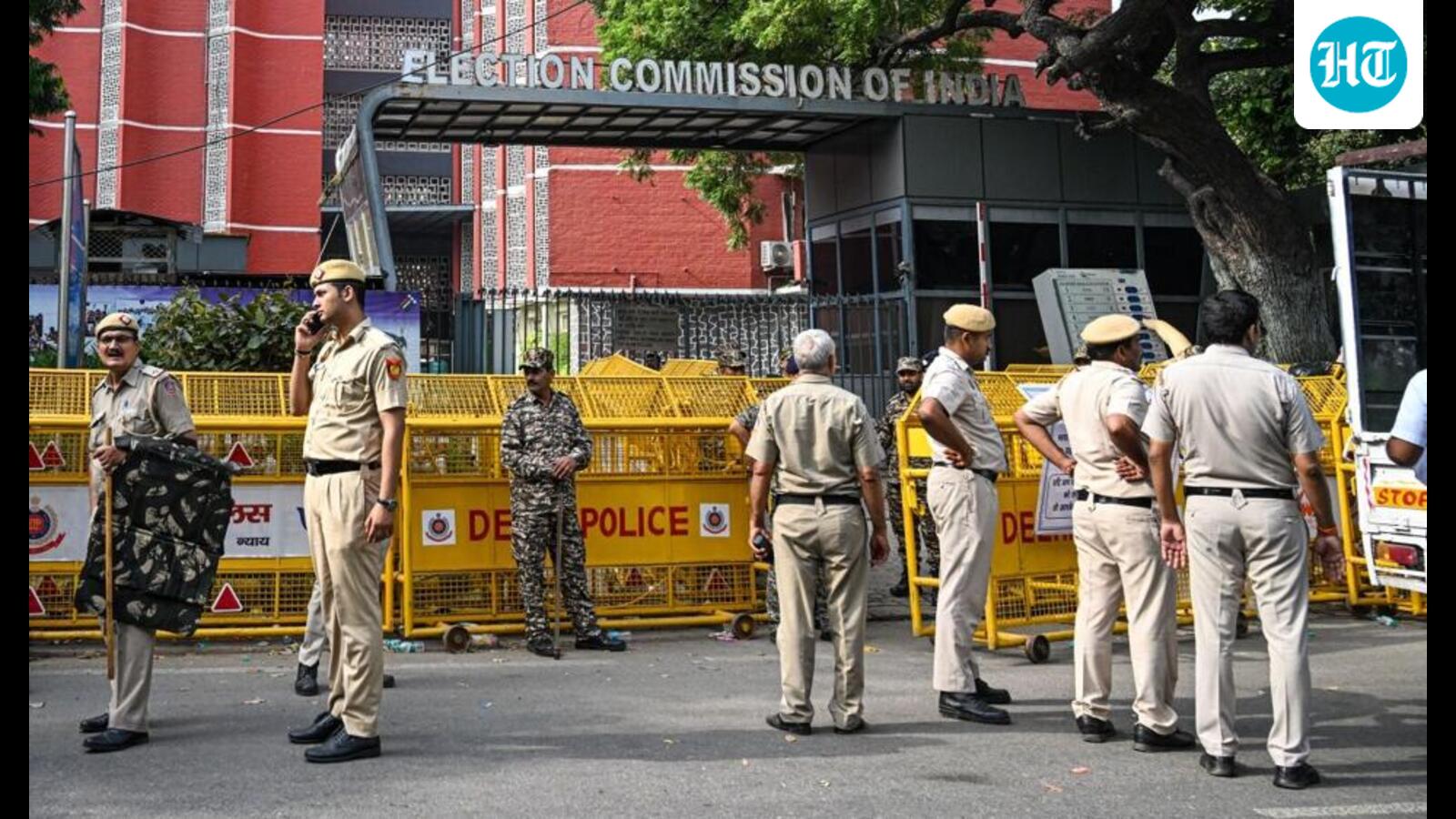
Fresh arguments about how the Election Commission of India (ECI) works have renewed a broader question in Indian governance: how much freedom should bodies that sit outside the elected government actually have? A Hindustan Times opinion piece argues that the debate is muddled because people use words like 'autonomy' and 'independence' loosely, without asking what those bodies are for.
The piece sorts the state's many bodies into three rough groups. Some, like the Securities and Exchange Board of India, handle specialised technical work. Others, such as the ECI, exist to make democratic processes function. A third group, including the Reserve Bank of India, falls somewhere in between, doing technical work that carries large political consequences.
The Reserve Bank's position became a flashpoint during the 2016 demonetisation exercise, when critics said the central bank had approved the government's decision without genuinely weighing it on its merits. That criticism assumed a central bank should keep some distance from the government on policy within its regulatory role. The author notes that this assumption is often treated as obvious, even though it depends on separating economic decisions from political ones, a separation scholars such as Quinn Slobodian have questioned as part of a wider neoliberal consensus.
The author also warns against the opposite extreme. In India, where Parliament has frequently been overshadowed by the executive, direct government control over the central bank raises its own risks. The tension showed up in the Supreme Court's judgment upholding demonetisation, which praised central bank independence in principle while leaning on a loosely defined idea of consultation between the bank and the government. The author labels the result an incoherent position, which he has called 'Schrodinger's independence.' Justice Nagarathna's dissent, by contrast, applied the principle consistently and concluded that it had been breached.
The core argument is that the right level of autonomy depends on how an institution relates to democratic life. If economic decisions are seen as subject to democratic oversight rather than purely technical, the central bank should be accountable to the wider public through elected representatives, even if the form of that accountability is still open. The same logic applies to the ECI. Calls to strip it of political input and run it as a purely technocratic commission only make sense if elections are treated as simple administration. If elections are understood as the expression of democratic will, the commission needs a design that keeps it impartial and accountable, and the author argues that routine parliamentary scrutiny alone would not be enough. One possibility he floats is a multi-party structure for oversight.
For readers, the stakes are practical. How these institutions are built determines who checks the rules on elections and monetary policy, and whether those checks hold up under pressure. The debate is less about whether bodies should be insulated from politics and more about how they should be answerable to it.
Read the full opinion piece at Hindustan Times.